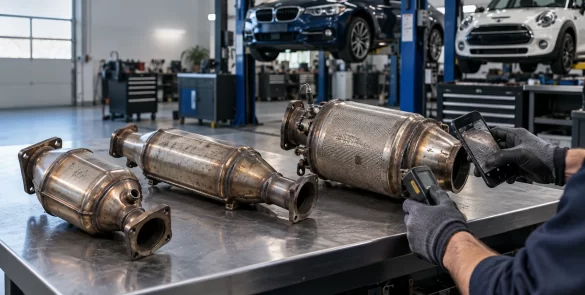
The scrap metal market is constantly changing, with price fluctuations influenced by both global economic developments and local conditions. To make informed decisions about scrap metal buying or scrap metal collection, it is important to understand which factors determine price levels in today’s market.
The Health of the Global Economy and Industrial Demand
When the global economy grows, industrial demand for metal products increases rapidly, automatically driving up scrap metal prices. During an economic downturn, however, production slows and market prices decline. Research published by the World Bank confirms the close relationship between economic cycles and raw material markets.
Type of Metal and Its Market Value
Prices vary significantly between different types of metal. Non-ferrous metals, such as copper and aluminium, are considerably more valuable than ordinary ferrous metals. Therefore, non-ferrous metal prices are closely linked to international demand and availability. The more widely these metals are used in modern technologies, the higher their market value becomes.
Trade Policies and Customs Tariffs
International trade rules and customs tariffs can significantly affect metal prices. For example, restrictions on steel or aluminium imports in a particular country can increase the value of these metals in the local market. The OECD and Eurostat regularly emphasise that protectionist policies often cause price fluctuations throughout Europe.
Supply Chain and Logistics Challenges
Disruptions to transport, port operations or production can slow down supply chains. Limited supply inevitably increases scrap metal prices, as buyers compete for limited resources. Situations observed during global crises clearly demonstrate how vulnerable the metal market can be.
Energy and Recycling Costs
Recycling requires large amounts of energy, meaning that its costs are directly linked to the energy market. When electricity or fuel prices rise, recycling expenses also increase, ultimately resulting in higher scrap metal collection prices. The International Energy Agency, IEA, regularly warns that rising energy prices have a significant effect on industrial costs.
Environmental Regulations and Sustainability
Stricter environmental standards require companies to invest in more advanced recycling technologies. This increases costs but also improves the sustainability of the industry. The European Union’s Green Deal is a good example of how regulations can influence the scrap metal buying market while guiding it towards an environmentally responsible future.
Local Market Conditions
Regional factors are equally important. In major cities such as Riga, scrap metal collection is more active, and demand is higher than in smaller towns. This means that prices can be higher than in rural areas.
Prices of Specific Metals
Certain metals are particularly vulnerable to market fluctuations. For example, the aluminium price per kg can change within a week based on both demand and production costs in the global market. Significant changes can also be observed in other non-ferrous metal segments closely linked to the automotive, electronics and construction industries.
Conclusion
Scrap metal prices are determined not only by the global economy but also by energy markets, trade policies and local conditions. The better these factors are understood, the easier it becomes to make decisions about scrap metal buying and maximise long-term profits. Understanding market dynamics provides an advantage to both businesses and individual sellers seeking to sell scrap metal at favourable prices.
2025 Market Signals: What to Monitor and Where to Check
| Signal | What It Means for Prices | Where to Check |
|---|---|---|
| Industrial production indices (Europe and the US) | Production increases → demand for metals rises → prices are more likely to move upwards | Eurostat – Industry · US Federal Reserve – Industrial Production |
| Chinese real estate and infrastructure activity | Construction accelerates → steel, copper and aluminium become more expensive | National Bureau of Statistics of China · IMF China Data |
| Energy prices (electricity and gas) | More expensive energy increases recycling costs → purchase prices move upwards | IEA – Energy Prices |
| Maritime freight rates and logistics | Expensive logistics and congestion reduce supply → prices increase | Drewry World Container Index |
| Difference between LME spot and three-month futures prices | Contango and backwardation signals indicate a short-term surplus or shortage | London Metal Exchange |
| Scrap metal export and import flows | Exports increase and local supply declines → domestic market prices rise | UN Comtrade |
| Automotive production forecasts | Growth in electric vehicle and overall vehicle production increases demand for copper and aluminium | OICA – Production Statistics |
| Electronics cycle (semiconductors) | Growth in the semiconductor industry drives demand for non-ferrous metals | WSTS – Semiconductor Forecasts |
| Green transition (renewables and grid modernisation) | Smart grids, batteries and cables stimulate the copper and aluminium markets | European Commission – Green Deal |
| EU regulations on waste and sorting requirements | Stricter requirements increase costs but stabilise quality | EU Law – EUR-Lex |
FAQ
What Has the Greatest Impact on Scrap Metal Prices in Today’s Market?
The main factors are the state of the global economy, energy prices, supply chain disruptions and local demand. The value of specific non-ferrous metals is also important, including market developments affecting copper and aluminium.
Are Scrap Metal Collection Prices in Riga Different from Those in Other Cities?
Yes. Demand is higher in major cities, so scrap metal collection prices are usually better than in smaller towns or rural areas.
Why Are Non-Ferrous Metal Prices Higher Than Ferrous Metal Prices?
Non-ferrous metal prices, including prices for copper, aluminium and brass, are higher because these metals are widely used in technology, construction and the energy sector. Their supply is also more limited than that of ordinary steel or cast-iron scrap.
How Can I Get a Better Price for My Scrap Metal?
The best approach is to sort the materials, remove any impurities and monitor market trends. Check current metal prices before selling and choose a time when demand is high.
Can the Price of Aluminium Change Very Quickly?
Yes. The aluminium price per kg often changes within a week depending on the global market, energy costs and demand from industries such as the automotive and aviation sectors.