
Key Takeaways
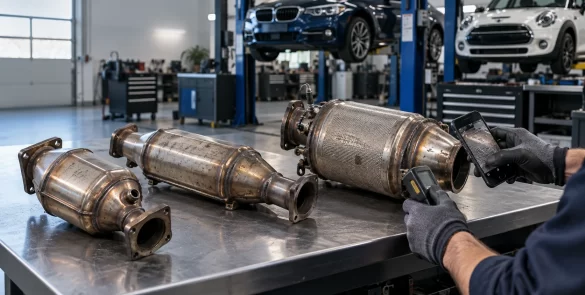
- The ceramic type has a mineral honeycomb block, while the metallic type has a thin metal foil structure.
- Both types help convert undesirable exhaust gas components.
- The recycling value cannot be reliably determined from weight or housing size alone.
- Markings and an intact internal core make accurate valuation easier.
- Even similar models may have different material compositions.
- Professional analysis helps avoid guesswork and unfounded offers.
How does an exhaust gas treatment component work?
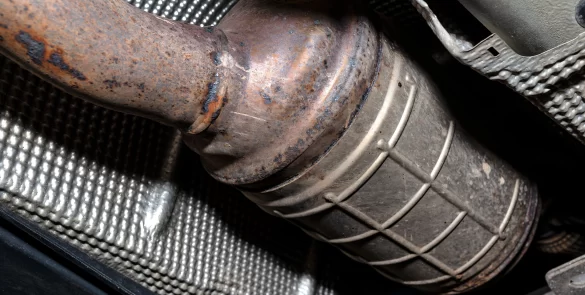
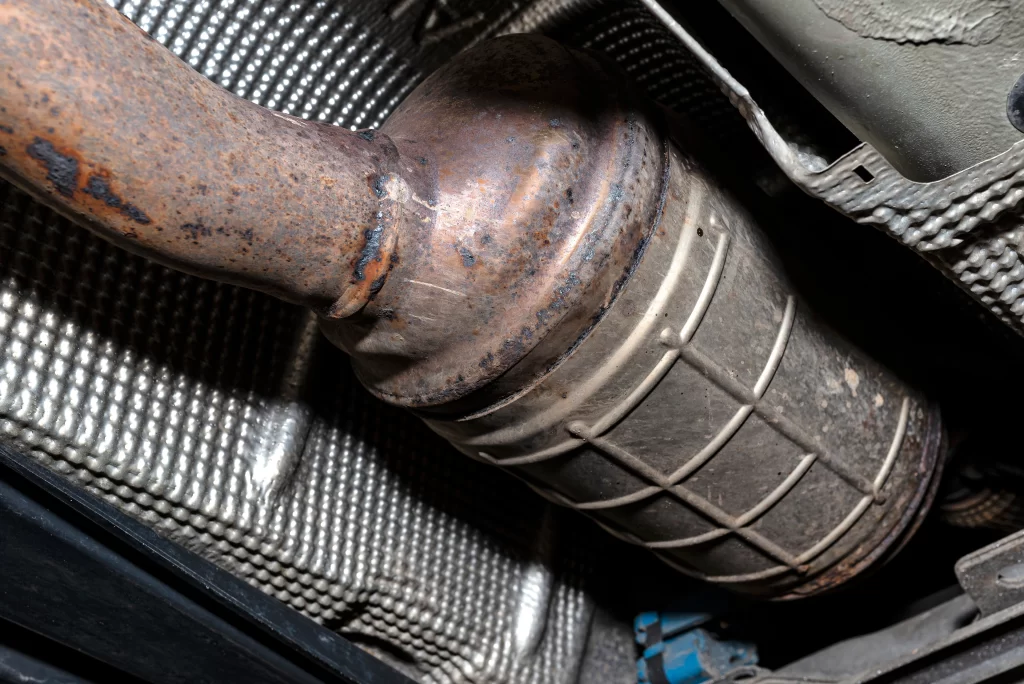
It accelerates certain chemical reactions and helps convert harmful gas components into less harmful compounds. The reaction promoter itself is not consumed during the process in the same way as fuel.Simply put, the answer to the question what does a catalyst do is this: it provides a suitable surface for chemical reactions. Exhaust gases flow through many small cells whose surfaces are coated with an active layer.According to the American Chemical Society, catalysis allows a reaction to follow a pathway that requires lower activation energy. Therefore, the term catalyst in chemistry does not apply only to cars. It is also used in industrial processes and the production of various substances.Why is a honeycomb structure needed?
The honeycomb structure provides a large contact area while allowing gases to flow through the unit. The greater the active surface area, the more exhaust gases can come into contact with the coating.In this respect, catalyst chemistry is not merely a theoretical phrase. Reaction efficiency is closely related to surface area, temperature, gas flow, and the condition of the active layer.How is the ceramic type constructed?
At the center of the ceramic type is a rigid, porous honeycomb block. It is placed inside a metal housing and secured with material that helps reduce vibration and protect the core.The ceramic substrate makes it possible to create many fine channels. Their walls contain a coating that provides the surface required for reactions. This type of core can be fragile, so strong impacts, prolonged overheating, or incorrect engine operation can cause cracking and crumbling.How can you identify a damaged ceramic core?
A rattling sound inside the housing, loss of power, or restricted exhaust flow may indicate damage. However, it is best to leave a reliable conclusion to an automotive service specialist.If the removed part is intended for recycling, it should not be hammered, cut, or cleaned with unsuitable products. Spilled material makes it harder to account for the materials and may reduce the quantity available for valuation. A more detailed process description can be found in the article about catalytic converter recycling steps.How is the metallic type constructed?
The core of the metallic type is usually made from very thin, corrugated foil that is rolled or arranged in a honeycomb form. It also has an active coating.This construction generally withstands mechanical stress better than fragile ceramic material. Thin walls can allow unrestricted gas flow, but this does not mean every metallic version is automatically more valuable. The actual composition of the recyclable material is decisive.Can a metallic core be identified by its outer housing?
Not always. Different types of parts can have similar housings, so it is safer to check the markings and use professional valuation.Cutting the housing open solely to identify the type is not recommended. Doing so can result in lost core material, sharp edges, and difficulty verifying the origin. An intact part with a legible code usually provides more information than separate pieces of housing and core.What are the main differences between the two types?
The main difference is the core material and its mechanical properties. Ceramic is more fragile, while metal foil generally withstands vibration and impacts better.| Comparison aspect | Ceramic type | Metallic type |
|---|---|---|
| Core base | Porous ceramic honeycomb block | Thin, shaped metal foil |
| Mechanical durability | More sensitive to impacts and cracks | Generally more resistant to vibration |
| Nature of damage | May crack, crumble, or melt | May deform or lose its coating |
| Value assessment | Based on code, condition, and composition analysis | Based on code, condition, and composition analysis |
| Preparation for handover | The housing, contents, and markings must be preserved | The housing, contents, and markings must be preserved |
What determines recycling value?
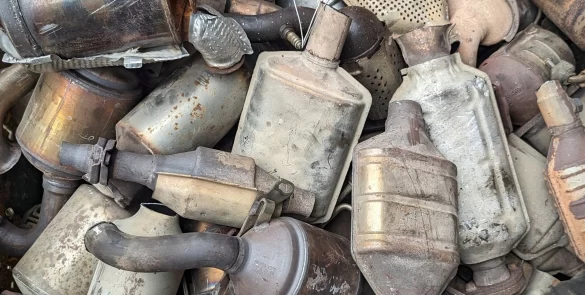
Value is determined by the part’s identity, material composition, completeness, and condition. Housing weight or dimensions alone are insufficient for an accurate offer.What affects a catalytic converter’s value the most?
Not the size of the housing, but the quality of the information and the condition of the core. The more reliably verifiable data there is, the more justified the offer.
A readable marking makes it possible to compare the part with analyzed samples and reach a more accurate valuation much faster.
An intact housing with its contents preserved provides more confidence than an opened, cut, or partially dismantled unit.
Cracks, crumbling, or spilled material make accounting more difficult and can reduce the amount available for valuation.
A similar appearance does not necessarily mean similar contents — the final value is confirmed by data and, if needed, laboratory analysis.
They help describe the part, but on their own they do not reveal how valuable the active coating inside is.
Why is the part code so important?
The code helps identify the part type and compare it with previously analyzed samples. Clear markings speed up the initial inspection, although the final valuation may require material analysis.Metalbee uses a database of more than 30,000 chemically analyzed units and laboratory testing. This approach makes it possible to base valuations on data rather than appearance alone.Does a larger part always cost more?
No. Size and weight alone do not reveal the composition or quantity of the active coating.A large housing may contain comparatively less valuable material, while a more compact part may have a different coating. Therefore, it is not reliable to compare two units solely by how heavy they feel in your hand.How is a professional valuation carried out?
The process begins by checking the markings and the condition of the housing and core. The part is then compared with database information or, if necessary, tested in a laboratory.- Keep the part intact and do not rub off legible markings.
- Record the code, vehicle model, and any other known information.
- Check whether the housing is empty, cut, or significantly damaged.
- Compare the part with analyzed sample data.
- If there is insufficient information, determine the composition using an appropriate analytical method.
- Provide an offer based on the inspection results.
How should you prepare the part for handover?
The part should preferably be handed over intact, dry, and with the manufacturer’s code preserved. There is no need to open it, crush it, or separate the core from the housing yourself.- Photograph the entire part from several angles.
- Take a clear image of the marking or code.
- State the number of units and their known origin.
- Store the part in a place where its contents cannot spill out.
- Do not mix core fragments with dust, metal pieces, or other waste.
- Before handover, find out which documents will be required.
When should you contact a professional buyer?
A professional valuation is useful when the part type is unknown, the code is not in the database, or several different units need to be assessed. It is also important when the core is damaged or has partially spilled out.Reliable catalytic converter purchasing includes a clear acceptance process, verifiable valuation, and transparent payment. Before making a transaction, it is worth asking whether the amount is determined by the code, sample data, or laboratory results.Summary
The ceramic and metallic types differ mainly in their core construction. The ceramic honeycomb block is more fragile, whereas the metal foil design generally withstands mechanical stress better. However, recycling value is not determined by the type of construction alone.For a more reliable valuation, preserve the housing, internal contents, and markings. Metalbee can inspect the part using its code, analyzed sample data, and, where necessary, laboratory results. This helps you receive a clear offer without guesswork.FAQ
Is the ceramic type always more valuable than the metallic type?
No. Value is determined by the composition, model, completeness, and condition of the specific part, not only by the core material.
Can the part be cut open before handover?
This is not recommended. Opening it can cause some of the core material to spill out, markings to be lost, and sharp, hazardous edges to form.
Is the vehicle brand enough for valuation?
Usually not. The part code, photos of the entire housing, vehicle model, engine information, and details about the part’s condition are useful.
Why can two similar parts have different values?
They may differ in manufacturer, application, internal coating, and level of wear. Therefore, external appearance is not a reliable basis for comparison.
What should I do if the ceramic core has spilled out?
Collect the material in clean, sealed packaging and do not mix it with other waste. Keep the housing and markings as well, then request a professional valuation.