
Introduction: The emission control units used in Toyota and Lexus vehicles can differ significantly even within the same model. For Prius, Auris, and Avensis versions, the production year, engine, fuel type, and part code are important. Therefore, a catalytic converter must be assessed according to the specific part, not just the vehicle make or model.
Key Takeaways
- A Toyota or Lexus model name alone does not determine the value of a part.
- An accurate assessment requires a code and clear photographs of the part.
- Hybrid and petrol versions may have different emission system units.
- An original part must be distinguished from a replacement installed later.
- Damage and an incomplete housing can affect the assessment.
- Secure storage reduces the risk of theft and mixing up parts.
Why Are Toyota and Lexus Parts Assessed Separately?
Each part is assessed individually because similar vehicles may have different units and codes. This is influenced by the model, generation, engine, and the market for which the vehicle was originally manufactured.
The Toyota Prius, Auris, or Avensis name provides an initial indication, but it is not enough. A Lexus hybrid part also cannot be reliably identified solely by the vehicle badge. Two visually similar housings may differ in markings, internal material, and configuration.
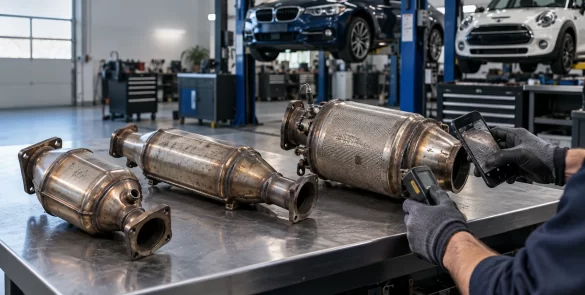
That is why professional catalytic converter purchasing begins with identification. Metalbee uses a database of more than 30,000 chemically analysed units, laboratory work, and the expertise of experienced technicians. This helps match markings with verified analysis data.
Are Prius and Other Hybrid Parts Always Worth More?
No, a hybrid drivetrain alone does not guarantee a higher valuation. The specific part, its code, origin, and condition are decisive.
First, it is necessary to check whether the unit is original. Then, the exact part number must be determined and the housing checked to ensure it is not empty or significantly damaged. For a broader comparison, see the article on which is worth more: a hybrid or petrol catalytic converter.
How Should You Prepare a Toyota or Lexus Part for Assessment?
Prepare a readable code, several photographs, and basic information about the vehicle. The clearer the information, the fewer additional questions arise during the assessment.
- Find the stamped or engraved marking on the housing.
- Carefully remove dirt without damaging the code.
- Photograph the part from both sides and as a whole.
- Provide the model, production year, engine, and fuel type.
- State whether the part has been cut, welded, or otherwise damaged.
What Does the Table of Data Required for an Initial Check Show?
The table shows which data helps identify the part and why it is needed. It is useful for both repair shops and private owners.
| Information | Why It Is Needed | How to Provide It |
|---|---|---|
| Part code | Helps find the corresponding record in the database | A sharp close-up photograph |
| Vehicle model | Narrows down the possible range of parts | Prius, Auris, Avensis, or Lexus model |
| Engine details | Helps distinguish petrol, diesel, and hybrid versions | Engine capacity, fuel type, and production year |
| Condition | Reveals damage or incomplete configuration | Overall photographs and a brief description |
What Does the Assessment Depend On?
The assessment depends on accurate identification, chemical analysis data, the part’s condition, and current market information. Therefore, a fixed figure based solely on the vehicle model can be misleading.
Metalbee uses laboratory methods and a database built from analysed parts for its assessments. Cooperation with leading recycling plants and market monitoring help prepare a documented offer. Therefore, catalytic converter prices should be determined for the specific unit.
Is a Diesel Avensis Assessed the Same Way as a Petrol or Hybrid Model?
No, emission systems for different fuel types cannot be treated as equivalent automatically. A single vehicle may also contain several different emission control components.
When submitting an enquiry, clearly state whether the vehicle is a petrol, diesel, or hybrid version. If you do not know, check the registration information or engine designation. A useful follow-up is the explanation of how diesel and petrol systems differ.
How Can You Protect Your Toyota or Lexus from Part Theft?
It is best to park the vehicle in a well-lit, visible location or in a secured area. Additional protection and promptly noticing suspicious activity reduce the risk.
According to Police.uk recommendations, thoughtful parking choices, security cameras, and positioning the vehicle so that access underneath is more difficult can make access harder for thieves. The police also recommend considering part marking and a suitable protective device.
If the part has already been removed during a legitimate repair or vehicle dismantling process, retain information about its origin. The European Commission compiles information on end-of-life vehicles and their recycling regulations on the European Commission environmental website.
Summary
Assessing parts from Toyota Prius, Auris, Avensis, and Lexus hybrids requires an accurate code, high-quality photographs, and vehicle details. The model name is only a starting point. Metalbee’s laboratory, technicians, and extensive database of analysed units help prepare a well-founded assessment. If you want to sell a removed part, car catalytic converter purchasing begins with simply submitting information and images.
FAQ
Is the Toyota model name enough for an assessment?
No, the model name is usually not enough. One Prius, Auris, or Avensis model may have several engine and emission system versions. Send the part code, overall photographs, production year, engine capacity, and fuel type. This information makes it much more reliable to identify the specific unit.
What should I do if the code on the housing is unreadable?
Take several close-up photographs in good lighting and include overall images of the part from both sides. Also provide the vehicle model, year, and engine details. Do not try to expose the code by deep sanding, as this may damage the remaining markings and make identification more difficult.
Can a damaged or cut part be assessed?
Yes, but clear images and an honest description of the damage are required. State whether the housing is cut, welded, deformed, or incomplete. If possible, also photograph the inside without dismantling anything further. The final value is determined by inspecting the specific unit and the available analysis data.
Is a Lexus hybrid part worth more than a Prius part?
This cannot be determined solely by the make or model. The specific part codes, construction, condition, and inspection data must be compared. Different production years of the same Lexus or Prius model may also use different parts. Therefore, the safest approach is to submit each unit for separate identification.
How quickly can I receive an initial assessment?
The speed depends on how complete the submitted information is and whether the code can be found in the database. A clear photograph of the marking, an overall image of the part, and vehicle details reduce the need for follow-up questions. If the unit cannot be reliably identified remotely, a physical inspection or laboratory test may be required.