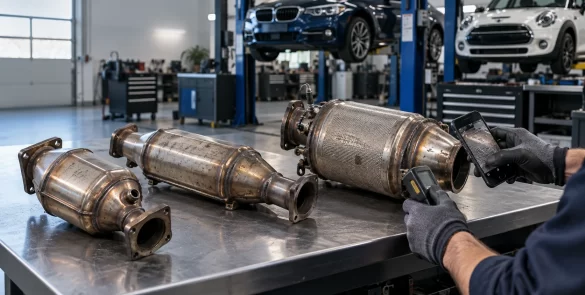
Diesel vs petrol: what’s inside and why it matters
Most petrol catalytic converters use a ceramic monolith honeycomb coated with platinum group metals. That coating drives chemical reactions that cut CO, HC, and NOx emissions. Diesel systems differ. Many diesels feature two components: an oxidation catalyst (DOC) and a diesel particulate filter (DPF). Some units combine these into one canister or use a separate selective catalytic reduction dose system with AdBlue. In short, the function is similar – reduce harmful exhaust – but the hardware is not the same.These design differences change which precious metals appear and how much. Petrol cats commonly rely on palladium and rhodium in addition to platinum. Diesel oxidation catalysts lean more on platinum, while DPFs are primarily ceramic filters that trap soot and may carry little to no recoverable precious metal. This is a central reason diesel units can be offered lower than petrol ones of similar size. For a clear technical overview of these construction differences and their impact on value, see the industry explainer at AutoRecyclingWorld, which notes that diesel converters generally yield less recoverable value than gasoline units due to their typical metal mix and the role of DPFs.How metal content shapes quotes
Buyers evaluate the ceramic substrate to estimate recoverable platinum, palladium, and rhodium. The expected mix tends to differ by fuel type and vehicle generation. Petrol cats often carry a higher proportion of palladium and rhodium, while diesels skew platinum-heavy or include a DPF with low metal content. Market demand for each metal also moves offers – when palladium or rhodium markets tighten, petrol cats often benefit more than diesel units.Spot markets matter, but weight or size alone is a poor predictor. A small, high-grade petrol converter can beat a larger diesel unit that contains a DPF section with negligible recoverable metal. For a practical overview of how buyers weigh substrate quality, serial references, and changing market conditions, read this guide to how catalytic converter prices are determined.Metalbee’s approach to fair testing and transparent reporting
Objective analysis underpins fair buying. Metalbee starts with visual identification of the canister, serial, and substrate. When needed, carriers are milled and homogenized for a representative sample. Lab spectrometry then reads the composition, so the offer reflects real recoverable content, not guesswork. This helps sellers understand why seemingly similar cans can receive very different quotes.For a current overview of categories and how we frame quotes by type and grade, see our live page for catalyst prices. If you are prioritizing a swift, clean sale with documentation and compliance, explore the scope of our catalyst purchase and related recycling services.Indicative ranges and what drives variation
Because each unit varies by make, year, and calibration, values naturally spread. Diesel units that are primarily DPF will tend to fall in lower bands compared with petrol three-way catalysts of similar size. Mixed systems that include a diesel oxidation catalyst with meaningful platinum can land mid-range. High-grade petrol converters with stronger rhodium and palladium content often command higher offers.Two things shape the final figure: lab-confirmed metal content and current market conditions for those metals. Sellers often focus on exterior size, but the internal ceramic and coating quality drive the outcome. Clean, intact units with readable serials are quicker to identify and confirm, which helps you get a precise assessment faster.Quick tips to identify diesel vs petrol converters
- Look for a soot-heavy canister or a honeycomb filter that appears porous and thick – that often points to a diesel DPF.
- Diesel systems may appear in two sections: a front DOC and a downstream DPF. The DOC is usually smaller and closer to the engine.
- Petrol converters typically present a lighter-colored ceramic honeycomb and a single canister layout, especially on older cars.
- Check for part numbers stamped or etched on the shield or body. A clear serial speeds up testing and quoting.
- Avoid opening or smashing the canister. It releases dust and can lower value by contaminating or losing material.
Reference table: diesel vs petrol value drivers
| Aspect | Diesel (DOC/DPF) | Petrol (Three-way Cat) |
|---|---|---|
| Main purpose | Oxidize emissions and filter soot via DPF | Reduce CO, HC, and NOx in one unit |
| Typical precious metals | Platinum-heavy; DPF may have low metal content | Mix of palladium, rhodium, and platinum |
| Common layout | DOC + DPF as separate or combined canisters | Single canister, sometimes multiple per vehicle |
| Value sensitivity | Less responsive to palladium/rhodium markets | More sensitive to palladium/rhodium trends |
| Identification tip | Heavier, soot-laden filter sections indicate DPF | Lighter ceramic monolith; fewer filter layers |
| Seller takeaway | DPF-only units trend lower; DOC with good coating can improve | Higher highs possible with strong Pd/Rh content |
Setting expectations: from request to offer
Send clear photos of the whole canister, both ends, and any serials. Note the car make and engine type if you have it. We start with database matching and proceed to lab sampling if needed. This two-step process balances speed and accuracy, so you get an offer that reflects the real material, not a guess based on shape.If you want to understand broader market context that touches scrap metals too, our guide to metal prices explains which factors move quotes. It also shows why small changes in purity or contamination can shift your payout.Practical preparation tips before selling
- Keep the unit intact. A sealed catalyst is easier to evaluate and tends to retain value.
- Brush off heavy dirt on the shell, but avoid cutting or shaking out the substrate.
- Document the donor vehicle if possible. It helps tie the serial to the right reference.
- Package safely to avoid cracks during transport.
- Ask for a copy of lab results when sampling is performed – it clarifies how the offer was built.
Environmental notes: why recycling matters
Every converter recovered reduces the need to mine fresh ore. That saves energy and lowers environmental impact. Diesel DPF recycling also captures trapped particulates, keeping them out of landfills. Responsible handling protects workers and the environment while returning platinum group metals to industry supply.Concerned about theft and compliance? Review our customer guidance on how to prevent catalytic converter theft and ensure legal selling.Real-world example scenarios
Scenario 1: A diesel SUV with a combined DOC/DPF unit. After lab sampling, the DPF section shows minimal precious metal, while the DOC section provides modest platinum recovery. The final offer lands below what a similar-size petrol unit might fetch, but above a DPF-only canister.Scenario 2: A compact petrol hatchback with a small three-way cat. Despite smaller size, the substrate tests strong for palladium and rhodium. The resulting offer exceeds many diesel DOC/DPF assemblies of larger size.Scenario 3: A mixed lot of unmarked converters. Serial identification is limited, so controlled milling and spectrometry are used. The final settlement reflects the measured content across the batch, with a clear report of composition.How to get a precise offer from Metalbee
Send photos, serials, and any vehicle details. We will advise whether visual matching is enough or if sampling will speed things up. For current categories and submission steps, start with our live catalyst prices page. If you are selling multiple items, our catalyst purchase team can coordinate logistics, quick feedback, and documented recycling.Common questions on diesel vs petrol value
Why are diesel units often lower? Because many include DPF sections with little recoverable precious metal, while petrol units typically rely on palladium and rhodium that can raise recoverable value. That difference influences offers, even when the diesel canister looks larger.What about market swings? The metals market can shift. Petrol values tend to be more exposed to palladium and rhodium trends, while diesel DOC value aligns more with platinum. Good buyers track these changes and reference homogeneous sampling to keep offers fair over time.When do range expectations make sense?
Ranges help when serials are unclear or mixed lots vary. They set a realistic band, then narrow after testing. For batch sellers, pre-sorting by type – diesel DPF, diesel DOC, petrol – makes evaluations faster and narrows variance.Submit your sample for analysis
If you want a confident, documented quote grounded in lab data rather than guesswork, send a unit for assessment. We will report the measured composition that drives the offer and explain any differences between diesel and petrol outcomes. That way you can compare apples to apples.Finally, remember that broader scrap markets can move quickly. Learning the basics of purity, contamination, and grading pays off beyond catalysts. Our overview of Krāsaino metālu cenas offers handy context for sellers who also handle wiring, radiators, or mixed lots.Summary
Diesel and petrol catalytic converters differ in construction and metal mix, so they seldom fetch the same offers. Diesel DOC/DPF assemblies tend to yield less precious metal than petrol three-way cats, and DPF sections often contribute little to recoverable value. Accurate identification, careful handling, and lab-backed testing lead to fair outcomes. If you want a current frame of reference, start with the live page for catalyst prices, and consider our catalyst purchase for a compliant, fast process backed by reporting.FAQ
Do diesel catalytic converters always pay less than petrol?
No. Some diesel oxidation catalysts with strong platinum loading can outpace weak petrol units. But as a group, diesel units – especially DPF-only – trend lower because of limited precious metal content.
Can I estimate value by weight or canister size?
Not reliably. The substrate chemistry drives value. A small, high-grade petrol converter can beat a heavier diesel DPF with little recoverable metal.
Is it safe to open the canister for a look?
No. Breaking the shell can release dust and lower value by losing material. It also prevents clean lab sampling. Keep the unit sealed.
What influences offers besides metal content?
Market conditions, identification certainty, contamination, and batch consistency. Clear serials and intact units speed up accurate quoting.
Where can I learn more about related scrap market factors?
For a broader view of factors that influence quotes across materials, see our guide to metal prices. It explains how purity, sorting, and market conditions affect outcomes.