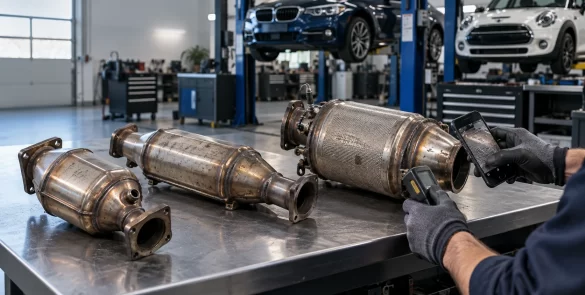
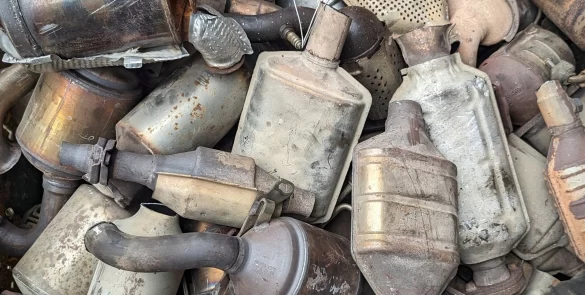
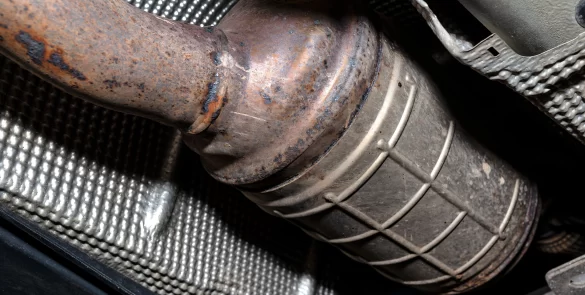
Introduction: If you own a hybrid car and plan to sell its used exhaust system part, one question comes up fast: is it worth more than a part from an ordinary petrol car? In many cases yes, but not every hybrid part sells for a higher price. The real answer depends on the code, the metal content, the condition, and how the buyer inspects it. If you want a clear starting point for a catalytic converter, it helps to know what buyers in Latvia actually value before they make an offer.
Key takeaways
- Hybrid parts often sell for more than ordinary petrol parts, but not always.
- The part code usually matters more than the make of the car.
- Condition, originality and a complete ceramic core can significantly affect the offer.
- A hybrid part is not the same as just any standard petrol exhaust system part.
- Model examples show that value can differ considerably even within a single car line.
- Clear photos, legible markings and honest information help you get a fair price quote.
- Comparing buyers is easier when quotes are based on identification and inspection rather than guesswork.
Are hybrid car parts usually worth more than ordinary petrol parts?
Often yes. However, a hybrid part is not automatically worth more than every standard petrol part.
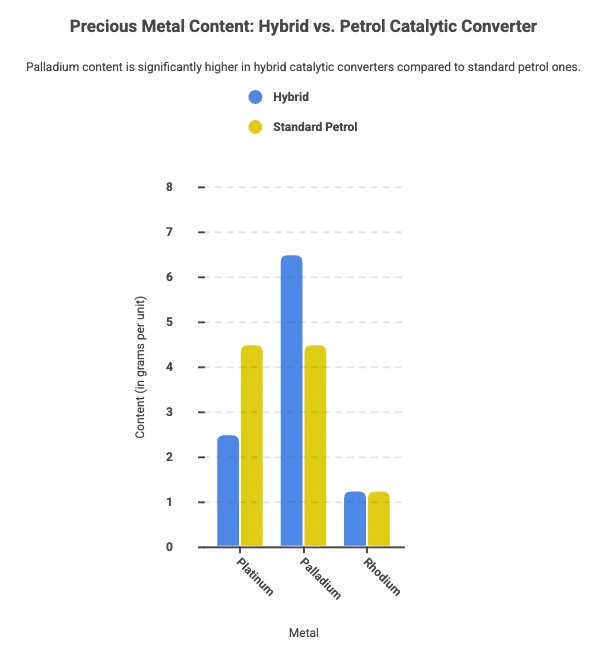
The broader market perspective in Latvia is straightforward: hybrid catalytic converters are often assessed separately from standard petrol vehicle catalytic converters. This is because the value of a specific unit depends on its code, precious metal content, originality, and condition rather than fuel type alone. As a result, two visually similar converters can receive very different price offers.
This matters because many sellers compare only by car type. One person might say, “This came from a hybrid, so it must be expensive.” Another might say, “It’s just a petrol car part with a different badge.” Both views miss the point. The market generally pays for the specific part, not for a simple label on the car.
A hybrid part should also not be confused with a standard petrol catalytic converter. From the outside it may look similar, but buyers can value it very differently once they identify the code and check the likely metal content.
Why can hybrid parts receive higher offers?
They can receive higher offers because buyers often expect a more favourable precious metal composition or a better preserved core. Even so, the exact outcome still depends on the specific part.
In practice, a buyer asks two questions. First, what exactly is this part? Second, how intact is it? If the answer to both questions is positive, the offer can be better than for a common petrol part from a mass-market model.
Many sellers only notice this after comparing quotes. A hybrid part that seemed completely ordinary can surprise them. But that surprise is usually determined by the code and the composition, not just by the word “hybrid”.
Why do some hybrid parts still sell for less?
Some hybrid parts sell for less because not every hybrid part is rare, clean or original. Damage and mistaken assumptions can reduce value quickly.
If the housing has been cut open, the core is missing or the markings are unreadable, the buyer takes on more risk. The same happens if the part is heavily overheated, contaminated, or suspected of being an aftermarket replacement rather than an original equipment part.
There is also a simple market reality. A lower-value hybrid part can still lose out to a stronger standard petrol part if the latter has a more desirable metal composition. That is why the answer is not “hybrid always wins”. It is: “identify first, then compare”.
What does this comparison table show about the most common value factors?
It shows why one hybrid part can be valued higher than, equal to, or lower than an ordinary petrol part. The badge on the car is only one piece of the puzzle.
| Factor | Hybrid part | Ordinary petrol part | Why it matters |
|---|---|---|---|
| Part identification | Often checked as a separate category | Usually compared against a broad petrol database | The right code helps buyers avoid guesswork |
| Expected metal content | Can be higher for some models | Can range from low to very high | Content determines recycling value more than car type alone |
| Condition | Can still lose value if damaged or empty | Can still be worth more if original and intact | Physical condition changes the real payout |
| Original or aftermarket part | Original usually helps | Original usually helps | Aftermarket parts often receive lower offers |
| Seller expectations | Often too high simply because it is a hybrid part | Often too low when the code is valuable | Accurate identification helps both sides stay realistic |
What affects the payout more than a hybrid versus petrol comparison?
The part code, originality and condition usually affect the payout more. Fuel type gives context, but it does not determine everything.
When buyers sort used exhaust system parts, they try to match the part against known references. That is why people with similar-looking parts can receive very different offers. One housing may contain a valuable original core. Another may be a common replacement with far lower recoverable value.
This is why many sellers use a specialist catalytic converter buying service rather than relying on rough guesses from general scrap intake channels. A specialist is more likely to check the code, match the part properly and explain why two similar-looking parts are not always valued the same.
Is the part code more important than the car model?
Yes, in most cases it is. The code on the housing tells a buyer far more than the badge on the hood.
A good example is the skoda octavia catalytic converter. It sounds like one clear category, but it is not. As Thermo Fisher Scientific explains, precious metal content can vary considerably between different catalytic converter samples even within the same type. This illustrates an essential point: even within one car family, value can differ significantly.
So when a seller says, “This is from an Octavia,” that is only the first layer of information. The buyer still needs the exact markings, shape and condition. Without those, any offer is only a rough estimate.
If you want more detail on how fuel type can affect value in a broader sense, Metalbee also offers a useful article on comparing diesel and petrol catalytic converter values. It helps explain why specific categories should never be lumped together too loosely.
Does condition change the outcome?
Yes, sometimes very significantly. A valuable code can still lose value if the part is damaged, opened or empty.
Buyers look for signs that the part is original and complete. Deep cuts in the housing, obvious tampering, or a loose and broken core can reduce the amount a buyer is willing to pay. Missing heat shields or surface rust are not always a big problem, but missing content certainly is.
That is why sellers should avoid cleaning, cutting or shaking the part just to “check” it. What seems like a harmless step can make inspection harder and reduce confidence in the part.
How do buyers in Latvia inspect a used catalytic converter?
They usually start with identification and a visual inspection. The part is then compared against known references and its physical condition.
A careful buyer does not have to guess from the car brand alone. They look at the markings on the housing, the part type, the size, and whether the part looks original. If the code is legible, the process becomes much faster and more accurate.
This is exactly where reliable catalytic converter prices come from. A good quote is based on identification and inspection, not on vague promises. If a buyer cannot explain what they checked, you should ask more questions before accepting an offer.
What should you bring or show before asking for a quote?
Bring the part intact if it has already been removed, or send clear photos if it is still on the car. The better the information, the more accurate the quote.
Useful information includes legible housing markings, wide photos of the whole part, and a note about the car’s make, model and year. If you know whether the part is original or was previously replaced, say so. Honest information saves time for both sides.
If you are unsure where legal and safe selling routes are available in the country, this guide to selling catalytic converters safely and legally in Latvia is a practical next read. It helps you understand the process before you set off with the part.
What does this seller checklist table show before a sale?
It shows simple checks that help you get a clearer quote and avoid confusion. Most of them take only a few minutes.
| Before selling | What to check | Why it helps |
|---|---|---|
| Read the markings | Look for numbers or codes stamped on the housing | Buyers can identify the part faster |
| Take clear photos | Show the whole part and close-ups of the code | Remote quotes become more accurate |
| Keep it intact | Do not cut, open or damage the housing | Condition is easier to verify |
| Provide car details | State the make, model, year and engine type if known | It helps narrow down the possible match |
| Ask how the price is set | Check whether it is based on the code and inspection | You can compare offers more fairly |
Should the part be removed before comparing offers?
Not always. In many cases a buyer can give an initial quote from photos and markings while the part is still on the car.
This matters because some sellers remove the part too early. Once that is done, it is no longer easy to step back if the part gets damaged or cut in the wrong place. If possible, get an initial quote first.
When is a quote sufficient while the part is still on the car?
A quote taken while the part is still on the car is often enough for the first step, provided the markings are visible. It gives you a rough range before any work begins.
This is useful when you are still deciding whether removal makes sense at all. The buyer may ask for a few clear photos, brief car details and close-ups of the code. That can be enough to decide whether the part needs a closer inspection.
When is removal useful?
Removal is useful when the code is not visible or the buyer needs a better physical inspection. It is also useful if the part has already been replaced.
Even then, the safe rule is simple: remove it carefully and keep the part whole. A complete, untouched part is easier to value and easier to trust.
How can you compare offers without getting confused?
Use the same information for every price request and ask the same questions each time. Then you are comparing like for like.
Do not send one buyer a clear photo of the code and another only the car model. Do not compare a firm quote given after inspection with a vague estimate over the phone. These are not the same kind of offer.
It also helps to ask whether the price after inspection is fixed or only an initial estimate. A transparent process is just as important as the number itself.
What questions should you ask a buyer?
Ask how they identify the part, what can reduce the offer, and whether the payout changes after inspection. Clear answers usually indicate a more trustworthy deal.
You can also ask whether the buyer serves deals directly in the city, if you are interested in catalytic converter buying in Riga. This is useful when transport time matters or you want a faster handover.
Finally, remember that the highest first number is not always the strongest real offer. An honest buyer explains what the price is based on. That makes the result easier to trust.
Summary
Hybrid car exhaust system parts are often worth more than ordinary petrol parts, but a simple “hybrid versus petrol” comparison never tells the whole story. The part code, originality and condition usually matter more than the badge on the car. If you want a fair result in Latvia, compare buyers using the same photos and information, keep the part intact, and look for clear, inspection-based quotes rather than rough promises. For sellers who want a straightforward route with specialist support, Metalbee offers a focused approach to catalytic converter valuation and recycling.