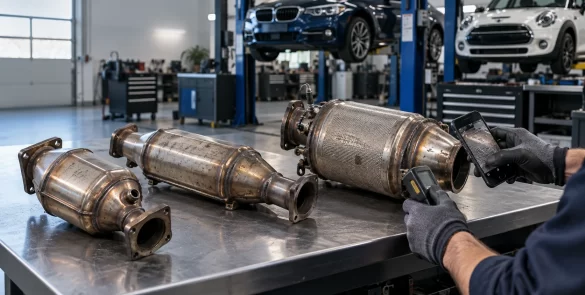
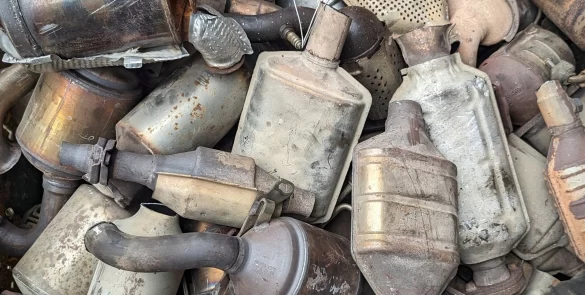
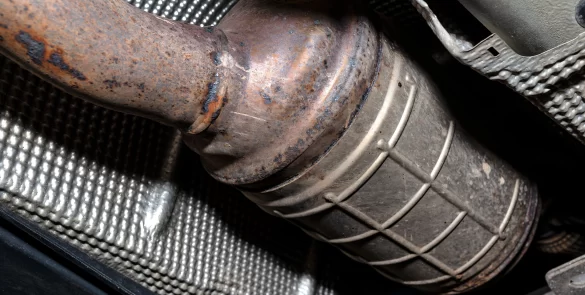
Today, catalytic converter recycling is not only a way to earn money but also an essential contribution to environmental protection. Automotive catalytic converters contain valuable precious metals, and their reuse reduces the need for new mining and minimizes harm to nature.
Metalbee is a company specializing in the purchasing and professional recycling of catalytic converters in Latvia, offering transparent conditions, fair prices, and a sustainable approach to every transaction.
Why is catalytic converter recycling so important?
Catalytic converters contain platinum, palladium, and rhodium – metals that are rare, expensive, and widely used in industry. Without recycling, these resources would be irreversibly lost.
Key benefits for society
Reduced environmental burden
Lower dependence on new metal extraction
Reduction of waste volumes
Promotion of a sustainable economy
Metalbee ensures that every catalytic converter is processed in accordance with the highest environmental and quality standards.
Metalbee’s approach to catalytic converter purchasing
A transparent process from start to finish
Metalbee offers a clear and easy-to-understand purchasing process. The client always knows how the price is determined and which factors influence it.
The company’s core service – Catalytic Converter Purchasing – is based on real market data and precise material analysis.
How does the cooperation work?
The client hands over the catalytic converter
Identification and evaluation are performed
Precious metal content is determined
A fair market price is offered
Immediate payment
What affects the price of a catalytic converter?
The value of a catalytic converter is not random. It is calculated based on several technical and market-related factors.
Main price-determining factors
Vehicle make and model
Type of catalytic converter (OEM or universal)
Precious metal content
International exchange price fluctuations
Physical condition of the catalytic converter
Metalbee regularly updates Catalytic Converter Prices so that clients always receive a current and competitive offer.
Catalytic converter purchase price comparison
Below is an indicative table that helps understand price differences between various types of catalytic converters.
| Type of catalytic converter | Precious metal content | Approximate value |
|---|---|---|
| European OEM | High | High |
| Japanese OEM | Medium–high | Medium–high |
| Universal | Low | Low |
Exact Catalytic Converter Purchase Prices are always determined through individual analysis.
Why do clients choose Metalbee?
Long-term reliability
Metalbee does not focus on one-off transactions. The company’s goal is long-term cooperation based on trust and a professional approach.
Key advantages
Fair price determination
Modern analysis methods
Fast payments
Client consultations
Environmentally friendly recycling
Environment and sustainability – the foundation of Metalbee’s values
Responsible recycling
Each catalytic converter is processed in a way that maximizes the recovery of valuable metals and minimizes negative environmental impact.
Sustainability benefits
Reduced CO₂ emissions
Lower pollution
Reuse of resources
Support for the circular economy
Metalbee operates in compliance with European environmental requirements and industry best practices.
Who are Metalbee’s services suitable for?
Metalbee works with a wide range of clients, offering tailored solutions.
Main client groups
Auto repair shops
Vehicle dismantling companies
Scrap metal collection points
Private individuals
Transport companies
Each client is offered an individual approach and clear terms.
Future outlook of the catalytic converter market
The importance of catalytic converter recycling continues to grow. Precious metal prices fluctuate globally, while demand for recycling services keeps increasing.
Metalbee actively monitors market trends, invests in technology, and improves processes to always deliver the highest quality to its clients.
FAQ
Does Metalbee accept damaged or partially dismantled catalytic converters as well?
Yes, we also accept damaged or partially dismantled catalytic converters. External damage does not always affect the value — the most important factors are the type of catalytic converter and its precious metal content. If the casing is deformed, we assess it individually.
How quickly can I receive payment after handing over a catalytic converter?
Payment is usually made immediately after the catalytic converter is identified and evaluated. This means that in most cases you can receive payment during the same visit. The exact time depends on the type of catalytic converter and the scope of the inspection.
Why can the catalytic converter purchase price change every day?
Yes, prices can change daily because they are influenced by precious metal market fluctuations (platinum, palladium, rhodium). In addition, the price is affected by the catalytic converter model and its actual metal content. That’s why the current offer is always based on the latest market data.
Can a private individual hand over a catalytic converter, and what should I bring?
Yes, Metalbee works with both companies and private individuals. To make the process quick, we recommend bringing an identification document and, if possible, information about the vehicle make/model. This helps us identify the catalytic converter more accurately and offer a fair price.
How does Metalbee ensure that catalytic converter recycling is environmentally safe?
Yes, recycling is carried out responsibly and in accordance with environmental requirements to reduce the risk of pollution. The goal of the process is to recover as many valuable precious metals as possible and ensure proper material circulation. This helps reduce the need to extract new resources.