Key Takeaways
- The US-Israel strikes on Iran began February 28, 2026 and the conflict is actively escalating – this is not a future risk, it is a present one.
- The Strait of Hormuz is effectively closed to commercial shipping, disrupting 20% of global oil supply and pushing Brent crude to €75+ per barrel.
- Copper gains the most (+15-23%), brass follows closely (+11-15%), and aluminium rises through the Hormuz energy cost channel (+12-17%).
- Conflict-driven price spikes historically peak within 3-8 weeks – the clock started February 28. The selling window is open right now.
- PCB boards and e-waste benefit the most broadly – copper, gold, palladium, and silver all surge simultaneously during active armed conflict.
- Three scenarios ahead: further escalation (Brent €92+, copper toward €7.20/kg), frozen conflict (current elevated prices hold for weeks), or ceasefire (rapid 10-18% correction).
The answer to the central question is concrete: the US-Israel-Iran war is driving up non-ferrous metal prices in Latvia through three reinforcing forces that are all active simultaneously. The Strait of Hormuz has been effectively closed since March 1, with tanker traffic down roughly 80-100% as commercial operators, major oil companies, and insurers have withdrawn from the corridor. Oil prices have surged from around €64 per barrel before the strikes to €76 as of March 4. Rising energy costs are already increasing aluminium smelting costs worldwide. Defence sector copper demand from the conflict itself is adding structural upward pressure to LME benchmarks that feed directly into Latvian scrap metal buying rates.
How Global Non-Ferrous Price Spikes Translate into Daily Scrap Rates in Latvia
Latvia as a Price-Taker: The LME-to-Riga Chain
Latvian metal prices follow LME benchmarks with a 1-3 week lag – meaning the price shocks that began February 28 are arriving at Latvian buying centres right now, in the first week of March. Latvia produces no primary copper or aluminium, importing 100% of both, so local buying centres calculate their rates directly from international market data.
The price transmission chain runs like this: the LME sets the global benchmark, an EU market adjustment accounts for freight and insurance, and Latvian buying centres like Metalbee calculate the final purchase price based on material grade, purity, and volume. The EUR/USD exchange rate acts as a secondary amplifier – and with the US dollar strengthening on safe-haven demand during the conflict, euro-denominated scrap metal prices in Latvia are being pushed up from two directions at once.
Why the Strait of Hormuz Is the Single Biggest Factor Right Now
The Strait of Hormuz situation is the single most important factor driving prices right now. Following the February 28 strikes, Iran’s IRGC transmitted warnings via international VHF radio to all vessels in the strait that no ships were permitted to pass. At least three tankers were struck near the strait in the first days of March, and by March 1-2 vessel passages had dropped to near zero. Maersk and Hapag-Lloyd both suspended transits. Over 150 tankers carrying crude oil and LNG are now anchored in open Gulf waters, waiting. War-risk insurance premiums reached a six-year high and on March 5 protection and indemnity insurance was effectively removed for strait transits, making the economics unworkable for most operators. Up-to-date LME benchmark prices can be tracked in real time at the London Metal Exchange website.
The Oil Price Shock: Already in the Numbers
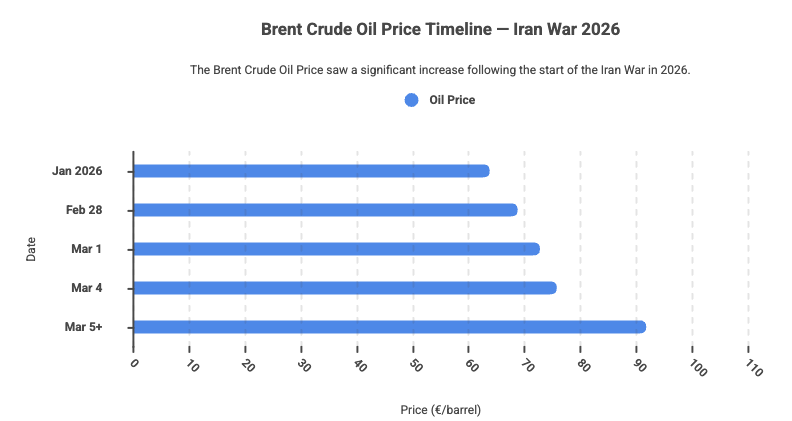
The energy cost blow is already quantifiable. Brent crude moved from around €64 per barrel before the strikes to €76 by March 4 – a 13-18% jump in under a week. Bank of America analysts have warned that a prolonged Strait closure could push Brent above €92 per barrel and European natural gas prices above €60 per megawatt hour. Qatar preemptively paused LNG production in the first days of the conflict – Europe gets 12-14% of its LNG supply from Qatar through the Strait, and higher gas prices translate quickly into higher aluminium production costs and tighter supply.
| Metal | LME Benchmark Price (USD/t) | EU Market Adjustment | Metalbee Buying Price (€/kg) |
|---|---|---|---|
| Copper (Grade 1) | ~10,200-10,800 | +3-5% (freight, insurance) | 5.20-6.40 |
| Aluminium (clean) | ~2,500-2,750 | +2-4% | 1.05-1.45 |
| Brass | ~7,200-7,800 (copper alloy) | +3-5% | 3.00-3.90 |
| Lead | ~2,000-2,200 | +2-3% | 0.90-1.15 |
Should Latvian Scrap Sellers Wait or Sell Now During the 2026 Non-Ferrous Surge?
Why This Crisis Behaves Differently from Previous Iran Escalations
For most sellers, acting now is the rational move. The conflict is five days old, the Strait of Hormuz is effectively closed, and oil prices have already moved sharply – meaning the price surge is real and currently priced into markets, not a forward expectation. Historical patterns from Iran-related escalation events, from the 2020 Soleimani strike through the prior 12-day US-Israel air campaign in June 2025, show a consistent pattern: sharp rises followed by stabilisation once immediate supply risk becomes clearer. The present crisis differs in one critical respect – earlier events moved market expectations, while this one has already altered physical shipping behaviour, insurance availability, and actual supply flows.
The Risk Calculation: Upside vs. Downside of Waiting
The risk calculation for sellers breaks down clearly. The upside case for waiting: if the conflict spreads to Gulf oil infrastructure – a Saudi refinery was already targeted by Iranian drones in the first days of March – and attacks on major export terminals like Ras Tanura or Jebel Ali succeed, Brent could exceed €92 and copper could push toward €7.20/kg in Latvia. The downside risk: any ceasefire or the start of US-Iran diplomatic talks could push LME prices down 8-15% within days. Metal prices are responding to fear as much as to actual supply disruption right now – and fear can reverse fast when headlines change.
The 10% Rule: A Practical Threshold for Scrap Sellers
The practical threshold: if the current scrap metal buying rate is 10% or more above the 6-month average, selling is sensible. Given that most Latvian non-ferrous rates are already 15-20% above late 2025 levels, that threshold has been crossed for copper, brass, and PCB boards. Aluminium and lead holders have slightly more flexibility, as these metals are less directly exposed to the Strait of Hormuz energy shock than copper.
| Metal | Current Price Surge vs. Late 2025 | Upside if Waiting | Downside if Waiting | Recommendation |
|---|---|---|---|---|
| Copper (Grade 1) | +18-22% | +10-15% (infrastructure strikes) | -12-18% (ceasefire) | Sell now |
| Aluminium | +10-14% | +8-12% (oil above €92) | -8-12% (ceasefire) | Sell now |
| Brass | +15-20% | +10-14% (follows copper) | -10-15% (ceasefire) | Sell now |
| Lead | +5-8% | +5-8% (energy costs) | -5-8% (ceasefire) | Flexible – can hold short-term |
| PCB boards / e-waste | +20-30% | +15-20% (palladium, gold) | -10-15% (ceasefire) | Sell now |
Which Metals Benefit Most in Latvia from the US-Israel-Iran Conflict: Copper, Aluminium, or Brass?
Copper benefits the most, driven by its dual role as a core defence electronics material and the LME’s most actively traded commodity. Brass, as a copper alloy, follows almost automatically. Aluminium is gaining primarily through the Strait of Hormuz energy cost shock rather than direct demand – and that channel is live and accelerating right now.
Copper: The Primary Beneficiary of the Iran War
Copper sits at the centre of this conflict economically. The February 28 operation involved hundreds of aircraft sorties, B-2 stealth bombers, Tomahawk cruise missiles launched from US warships, and HIMARS launchers – each of these weapons systems contains significant copper in their guidance electronics and electrical systems. Every modern military aircraft contains 450-680 kg of copper; armoured vehicles require 200-400 kg. The scale of Operation Epic Fury alone represents a meaningful near-term demand event for copper on top of the already elevated defence spending across NATO. Our article on non-ferrous metal buying in Latvia covers the practical basics of getting the best value from copper and other metals at a buying centre.
Aluminium: Driven by the Hormuz Energy Cost Shock
Aluminium is being driven by the energy cost channel. Smelting aluminium consumes 13-15 kWh of electricity per kilogram – no other major metal is more energy-intensive to produce. With Brent crude already at €76 and a prolonged Strait closure risking €92+ per barrel, electricity costs at smelters worldwide are rising sharply. Qatar preemptively paused LNG production in the first days of the conflict – Europe gets 12-14% of its LNG from Qatar through the strait, and elevated gas prices translate directly into reduced aluminium supply and higher spot prices.
Brass: Copper’s Closest Shadow
Brass tracks copper because copper makes up 60-70% of its composition. This makes brass one of the most straightforward metals to assess right now – its direction is nearly certain as long as copper prices stay elevated. Current non-ferrous metal prices at Metalbee reflect all of these market movements as they feed through from the LME in real time.
| Metal | Baseline Price €/kg (Late 2025) | Current Surge Estimate €/kg | Change % | Primary Driver |
|---|---|---|---|---|
| Copper (Grade 1) | 4.50-5.20 | 5.20-6.40 | +15-23% | Defence demand, LME safe-haven buying |
| Aluminium (clean) | 0.90-1.20 | 1.05-1.45 | +12-17% | Oil spike, Hormuz LNG disruption, smelting costs |
| Brass | 2.80-3.40 | 3.00-3.90 | +11-15% | Copper price transmission |
| PCB boards (standard grade) | 3.00-5.50 | 3.80-7.00 | +20-30% | Copper + palladium + gold simultaneously |
| Lead | 0.85-1.05 | 0.90-1.15 | +6-10% | Energy cost spillover |
2026 Scrap Price Scenarios in Latvia: What If the Iran War Escalates Further or a Ceasefire Is Reached?
The Strait of Hormuz is no longer a risk scenario – it is the current reality as of this writing. The IRGC claimed complete control of the strait on March 4, vessel passages are at near zero, and at least five tankers have been damaged. What happens to Latvia’s scrap metal collection prices over the next weeks depends primarily on how long this persists and whether the conflict expands to Gulf export infrastructure.
Scenario 1: Escalation – Gulf Infrastructure Under Attack
Escalation scenario (sustained Gulf infrastructure strikes, Brent above €92): A Saudi refinery was already targeted by Iranian drones in the first days of March. If attacks on major Gulf export terminals were to succeed, Bank of America analysts project Brent crude could exceed €92 per barrel and European natural gas could break €60 per MWh. In Latvia, copper buying rates could reach €6.80-7.20/kg. The key in this scenario is to sell quickly – the correction after a geopolitical peak is typically fast and steep.
Scenario 2: Frozen Conflict – The Current Base Case
Frozen conflict scenario (Hormuz de facto closed, no wider Gulf infrastructure damage): This is commodity analysts Kpler’s base case – a conflict lasting at least one week with partial de-escalation through coercive diplomacy rather than military resolution. Brent holds in the €73-83 range, LME metals remain elevated but stable, and Latvian buying rates hold at current surge levels. This is the most favourable scenario for sellers with larger volumes who can plan strategically over the next 2-3 weeks.
Scenario 3: De-escalation – What a Ceasefire Means for Your Scrap Value
De-escalation scenario (ceasefire or resumption of US-Iran talks): LME prices would correct 10-18% relatively quickly, with Latvian buying rates following within 1-2 weeks. For a longer-term perspective on Latvia’s non-ferrous market beyond the conflict premium, our analysis of Latvia’s non-ferrous metals market outlook to 2030 covers structural demand trends. The World Bank Commodity Markets Outlook notes that even in a de-escalation case, structural defence demand is likely to keep copper above 2024 averages throughout 2026.
| Scenario | Description | Copper €/kg | Aluminium €/kg | Brass €/kg | Seller Strategy |
|---|---|---|---|---|---|
| Escalation | Gulf export infrastructure struck, Brent €92+, Hormuz fully closed | 6.80-7.20 | 1.50-1.75 | 4.20-4.70 | Sell quickly – the spike peak is short |
| Frozen Conflict | Hormuz de facto closed, Brent €73-83, no new escalation | 5.20-6.40 | 1.05-1.45 | 3.00-3.90 | Plan your sale – strong prices hold for weeks |
| De-escalation | Ceasefire or US-Iran diplomatic talks resume | 4.20-5.00 | 0.88-1.10 | 2.50-3.10 | Sell before the correction – act fast |
Electronics Scrap (PCB Boards) in 2026: Does the Iran War Make Your E-Waste More Valuable in Latvia?
Why PCBs Carry a Composite Premium During Active Conflict
Yes – and more so than in most previous conflicts. PCB boards (printed circuit boards) contain four metals that are all surging simultaneously right now: copper (15-30% by weight), gold (trace amounts), silver, and palladium. Unlike pure metal scrap, PCB boards receive what commodity analysts call a “composite premium” – every metallic component climbs at once during active armed conflict, particularly one involving the scale of military hardware deployed in Operation Epic Fury and Iran’s retaliatory strikes across the Gulf.
Palladium: The Overlooked Metal in Your E-Waste
Palladium deserves particular attention here. It is used in electrical connectors, precision guidance systems, and catalytic converters – all of which see elevated demand during active military conflict. During geopolitical stress it also functions as a safe-haven asset, with investors moving capital into physical precious metals. According to USGS Mineral Commodity Summaries data confirms that palladium and platinum regularly rise 15-25% during periods of geopolitical stress. With the Iran war now in its fifth day and showing no immediate signs of resolution, that premium is active and reflected in current PCB buying prices.
Which PCB Boards Are Worth the Most Right Now?
A practical guide to maximising your PCB value at a scrap metal collection point: the highest-value boards are older server components (IBM, Dell, HP server motherboards), telecom equipment boards (Cisco, Ericsson routers), industrial control systems, and medical equipment. Consumer electronics such as old phones, tablets, and laptops fall into a mid-value category. Printers and household appliances are the lowest-value category.
How to Prepare Your Electronics Scrap Before Bringing It In
One important practical point: do not dismantle or strip PCB boards before handing them in. Intact boards weigh more and contain the full metal complex – buying centres like Metalbee assess them as complete units. Preparing electronics scrap does not mean taking it apart – it means bringing in clean, dry material, separate from batteries, which must be disposed of separately as hazardous waste.
The Iran war has created the most significant non-ferrous price surge in years – and it started just five days ago.
The Strait of Hormuz is effectively closed, oil is above €76 per barrel, and LME prices are feeding through to Latvian buying rates right now. Whether you have copper cable, aluminium profiles, brass fittings, or PCB boards – the window to act is open today.
Check current scrap metal prices and bring your scrap to Metalbee today. Get in touch →